

The Future of Rotomoulding Machinery: Trends Every Manufacturer Should Know
1. Why Rotomoulding Machinery Is Entering a New Era
For decades, the fundamentals of rotational moulding have remained elegantly simple: material, mould, heat, rotation and cooling.
What surrounds those fundamentals, however, is changing rapidly.
Manufacturers today are dealing with higher energy costs, tighter production schedules, growing expectations around consistency, increasingly complex product designs and greater pressure to maximise output from every square metre of factory space.
As a result, the next generation of rotomoulding machinery will not simply rotate faster or become larger.
It will become smarter, more efficient, more measurable and more integrated.
Here are the trends likely to shape the future of rotomoulding machinery.
2. Automation Will Become a Standard, Not a Luxury
Automation was once positioned as a premium feature.
Increasingly, it is becoming part of everyday manufacturing expectations.
Modern rotomoulding systems can incorporate programmable controls, process recipes, safety interlocks, digital operating interfaces and automated cycle management.
The objective is not simply to reduce manpower.
Automation helps reduce dependence on individual operator judgement and makes processes easier to repeat consistently across shifts.
For manufacturers producing at scale, that repeatability can be extremely valuable.
The future factory will still need experienced people—but their role will increasingly shift from manually controlling every stage to supervising and optimising the process.
3. Energy-Efficient Machines Will Lead the Next Phase of Manufacturing
Heating a mould requires significant energy.
That makes thermal efficiency one of the most important engineering challenges in rotational moulding.
Future machine development will increasingly focus on:
- Better oven insulation
- Improved burner efficiency
- More effective heat transfer
- Smarter temperature control
- Reduced heat losses
- Optimised cooling
- Efficient motors and drives
For manufacturers, energy efficiency has two benefits.
It reduces operating cost while also improving the environmental performance of the production process.
As energy becomes a larger component of manufacturing economics, buyers will increasingly evaluate machinery based on cost per product, not merely machine price.
4. Faster Cycle Times Will Define Competitive Production
Rotomoulding has traditionally been associated with longer production cycles than several other plastics-processing methods.
That is precisely why cycle-time optimisation represents such a major opportunity.
Better heating, cooling, insulation, mould design and process control can collectively reduce unnecessary minutes from each cycle.
One minute may sound insignificant.
Multiply it across multiple cycles, machines, shifts and years and it becomes considerable additional production capacity.
The race for faster rotomoulding therefore will not simply be about increasing rotation speed.
It will be about engineering the entire thermal cycle more intelligently.
5. Smart Monitoring and Data-Driven Production Will Grow
Tomorrow’s production manager will want more than a green light indicating that the machine is running.
Manufacturers will increasingly expect visibility into what is happening during production.
This can include:
- Cycle duration
- Temperature
- Rotation parameters
- Energy usage
- Machine status
- Production counts
- Alarms
- Maintenance indicators
Data makes it easier to identify variation before it turns into rejected production.
Over time, historical production information can also help manufacturers compare recipes, identify bottlenecks and improve operating practices.
The rotomoulding plant of the future will not simply produce products.
It will produce information about how those products were produced.
6. Consistency Will Matter More Than Just Output
Producing more pieces is useful only if those pieces meet the required specification.
This is why machine consistency will become increasingly important.
Customers expect repeatable:
- Wall thickness
- Strength
- Dimensions
- Surface finish
- Colour
- Product performance
Better control over heating, rotation and cooling can reduce variation between batches.
For industrial components, automotive products and engineered applications, repeatability becomes particularly important because production tolerances may be more demanding than those of conventional products.
The future of rotomoulding will therefore be measured not only in pieces per hour, but in acceptable pieces per hour.
7. Turnkey Rotomoulding Plants Will Become More Important
The industry is gradually moving away from purchasing unrelated machines from multiple suppliers.
Manufacturers increasingly want complete solutions.
That can include:
- Main rotomoulding machinery
- Moulds
- Pulverisers
- Mixers
- Extruders
- Scrap-processing equipment
- Material preparation
- Plant planning
- Installation
- Commissioning
- Training
There is a simple reason for this shift.
Every machine inside a factory affects another process.
When the entire system is planned together, production flow, space utilisation and compatibility can be addressed before installation rather than after problems appear.
The future buyer may therefore search less for a machine vendor and more for a rotomoulding technology partner.
8. Demand for Customised Rotomoulding Solutions Will Rise
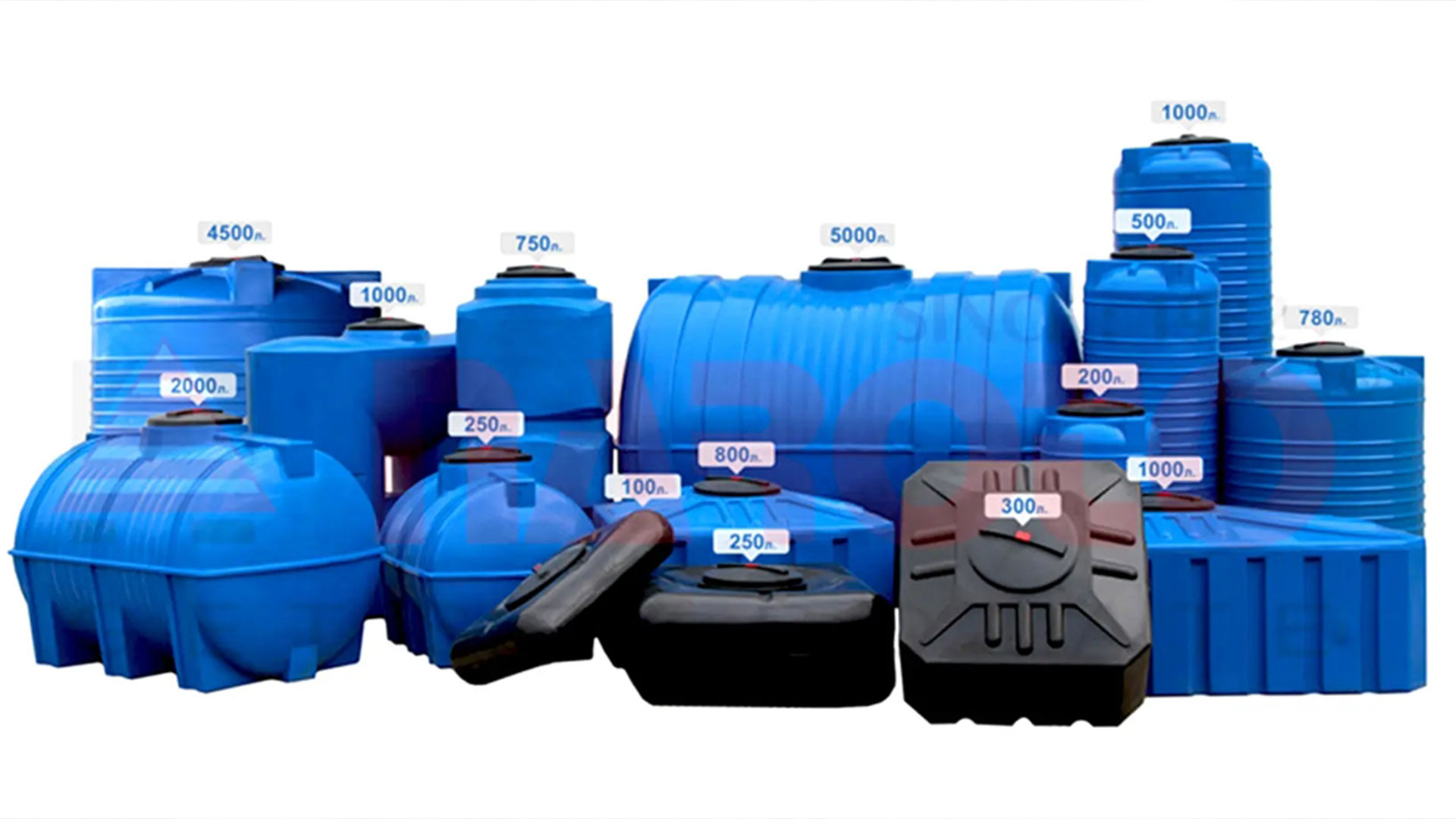
Rotomoulding is no longer limited to conventional tanks and containers.
Manufacturers are exploring applications across:
- Automotive components
- Material-handling products
- Furniture
- Agriculture
- Infrastructure
- Marine applications
- Industrial equipment
- Toys and recreational products
- Specialised engineered products
Different products can require significantly different machine configurations.
As applications diversify, machinery manufacturers will need to offer greater flexibility in arm design, oven size, station configuration, rotation parameters and control systems.
Standard machines will remain relevant.
But application-specific engineering will increasingly separate ordinary suppliers from serious solution providers.
9. Better Mould Quality Will Decide Product Finish and Durability
A sophisticated machine cannot fully compensate for weak tooling.
As product design becomes more complex, mould engineering will become increasingly important.
Good mould construction influences:
- Heating behaviour
- Cooling performance
- Dimensional stability
- Product detailing
- Surface quality
- Release from the mould
- Cycle time
Manufacturers will therefore increasingly evaluate machine and mould performance together rather than treating them as separate purchases.
In the future, some of the biggest improvements in rotomoulding productivity may come not from the machine alone, but from better interaction between machine, material and mould.
10. Ancillary Equipment Will Play a Bigger Role in Production Efficiency
The main rotomoulding machine gets the spotlight.
The equipment around it quietly decides how efficiently the plant actually runs.
Pulverisers, extruders, mixers, scrap cutters, grinders and material-preparation systems influence the quality and consistency of the material entering production.
Naroto, for example, offers ancillary machinery including pulverisers, extruders for colouring, compounding and recycling, scrap grinders, scrap cutters and mixers as part of its wider rotomoulding equipment portfolio.
As factories become more integrated, ancillary systems will increasingly be viewed as part of the production architecture rather than secondary equipment.
11. Sustainability Will Influence Machine Design and Material Use
Sustainability in manufacturing is moving from corporate presentation decks to factory-level decision-making.
In rotomoulding, this can influence both machinery and material strategy.
The industry will continue exploring ways to:
- Reduce fuel consumption
- Reduce electricity usage
- Minimise scrap
- Improve material utilisation
- Reprocess appropriate production waste
- Extend machinery life
- Improve thermal efficiency
Recycling and compounding systems may also become more relevant as manufacturers develop controlled strategies for suitable recycled material applications.
The objective is straightforward:
Make more useful product from every unit of energy and material entering the factory.
12. Global Demand Will Push Indian Manufacturers to Upgrade Technology
Indian machinery manufacturers increasingly operate in an international market rather than a purely domestic one.
Export customers bring different expectations around productivity, documentation, safety, automation, service and machine configuration.
That exposure creates pressure to continuously improve.
It also creates opportunity.
India has developed a substantial industrial machinery ecosystem with engineering talent, fabrication capabilities and cost competitiveness.
As Indian rotomoulding machinery manufacturers expand internationally, technology and service standards are likely to rise alongside them.
13. After-Sales Support Will Become a Major Buying Factor
Machinery specifications can increasingly be compared online.
Service quality cannot.
For a manufacturer running daily production, the ability to speak with someone who understands the machine can be worth more than another feature on a brochure.
Future machinery buyers will pay closer attention to:
- Response time
- Spare availability
- Remote troubleshooting
- Service engineers
- Training
- Documentation
- Preventive maintenance
- Long-term technical support
The transaction does not end when the machine is commissioned.
In industrial machinery, that is often when the relationship actually begins.
14. The Shift From Machine Supplier to Complete Solution Partner
This may be the biggest change of all.
Factories do not really need machines.
They need production.
A machine is simply one part of creating it.
That distinction changes what customers expect from their machinery partners.
Instead of asking only:
“Can you manufacture this machine?”
Customers increasingly ask:
“Can you help us manufacture this product efficiently?”
The second question requires a much deeper level of engineering knowledge.
It includes machinery selection, tooling, material preparation, plant layout, process settings, training, service and future expansion.
The strongest rotomoulding companies will therefore move from selling equipment to solving manufacturing problems.
15. What Manufacturers Should Look for in Future-Ready Rotomoulding Machinery
Before investing in new machinery, manufacturers should consider whether the equipment can support both today’s production and tomorrow’s requirements.
Evaluate:
- Automation capability
- Energy efficiency
- Cycle-time optimisation
- Flexible machine configurations
- Process repeatability
- Safety systems
- Data and monitoring capability
- Mould compatibility
- Ancillary integration
- Ease of maintenance
- Availability of technical support
- Expansion possibilities
Future-ready does not mean filling a machine with unnecessary technology.
It means choosing technology that continues creating value as production grows.
16. How Naroto Is Aligned With the Future of Rotomoulding Machinery
Naroto’s current portfolio reflects several of the directions shaping modern rotomoulding.
The company presents itself as a one-stop provider of rotomoulding machinery, moulds and turnkey solutions and states that its manufacturing facility spans approximately 2,00,000 sq. ft.
Its independent-arm systems are designed so individual arms can move separately, allowing products with different processing times to be handled within the same production environment. Naroto also highlights energy-efficient heat-transfer design, different fuel options and automated or microprocessor-based controls across parts of its machinery portfolio.
Alongside the main machines, its portfolio extends into moulds and ancillary equipment, supporting the broader shift from individual machinery supply towards integrated rotomoulding solutions.
That direction is increasingly important because the next phase of the industry will not be defined by machinery in isolation.
It will be defined by how efficiently the entire manufacturing system works together.
17. Conclusion: The Future Belongs to Smarter, Scalable Rotomoulding Systems
Rotomoulding itself is not disappearing.
It is becoming more sophisticated.
The fundamentals remain beautifully straightforward, but the engineering surrounding them is advancing.
Automation will improve repeatability.
Better thermal engineering will reduce wasted energy.
Smarter controls will generate useful production data.
Improved moulds will support increasingly ambitious products.
Ancillary systems will become better integrated.
And customers will expect machinery manufacturers to understand the entire production challenge rather than simply supply equipment.
The question manufacturers should be asking in 2026 is no longer:
“What machine should we buy next?”
It is:
“What kind of manufacturing system will keep us competitive next?”
That is where the future of rotomoulding begins.
